Vehicle Merchandising: Why Well-Priced Cars Still Sit on Your Lot
The car is priced right. It looks great on the lot. It still isn't moving. More often than not, the problem is the listing: price, a few specs and some photos, with no reason to pick your car over the identical one across town. Here's the merchandising playbook, and what we learned building vehicle pages from scratch.
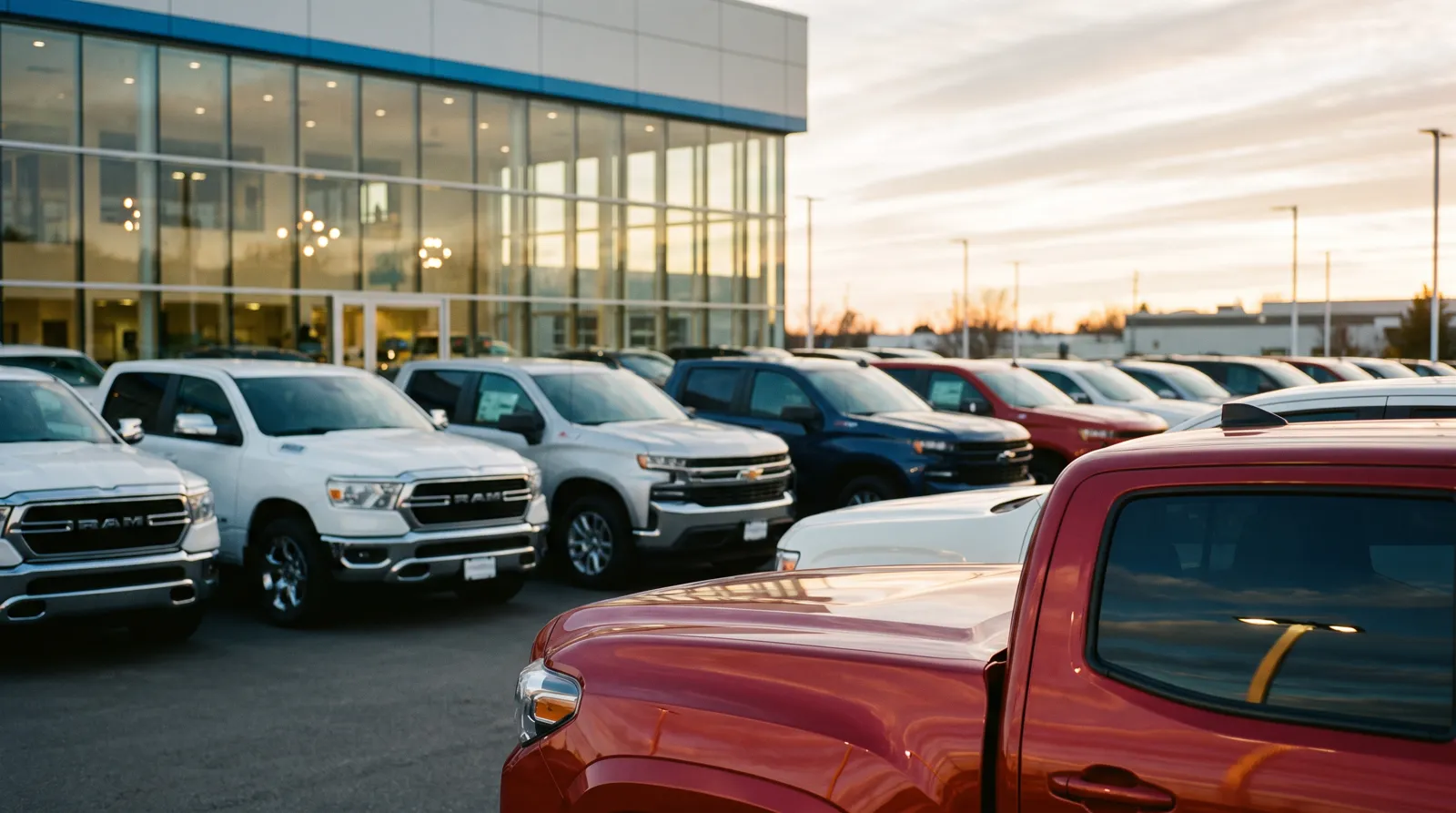
On a recent industry podcast, a dealer-group marketing director with nearly two decades on the vendor side put a number on the problem. Asked how much dealer inventory online is merchandised less than well, he said over 90%. Doing it right, by his count, takes him three to four hours a day, and he knows the tools.
The same conversation surfaced the pattern every used car manager has seen. Two units are aging. They look good on the lot, they're priced right, nobody has cracked the door. Then someone audits the listing like a shopper would, and the leak is obvious: the buyer made it to the VDP, found something missing or unclear, and left for another car.
Where listings lose buyers

- Too few photos, or the wrong ones. Blurry shots, missing angles, or a stock image with no context. Shoppers skip stock photos.
- Missing equipment. Options, packages, exact colors and original window sticker details that the shopper is filtering for.
- No story. Local trade, one owner, clean history report, new tires, new brakes, CPO, service records. That's the pedigree, and it's usually absent.
- Price as the whole pitch. "Priced right" gets the click. It doesn't close the comparison against three similar cars.
- Neglected descriptions. Many sites bury comments because dealers filled them with junk. But descriptions still feed search engines, AI assistants and shopper confidence.
- No consistency. One great merchandiser holds it together. When that person is busy, promoted or gone, the process collapses.
- Sloppy speed. Fast to market matters. Fast and wrong leaks buyers.
- Nobody audits like a consumer. Pages get published, not reviewed on a phone the way a shopper sees them.
The merchandising playbook
1. Treat every VIN like its own ad campaign
A VDP isn't a database row. It's the ad, the brochure and the first conversation. Every unit needs an answer to one question: why buy this car, here, now?
2. Make a required checklist per VIN
Don't leave quality to whoever is working that day. Every unit should clear the same list before and after it goes live. Use the checklist below as your starting point.
3. Get photos up fast, then replace them
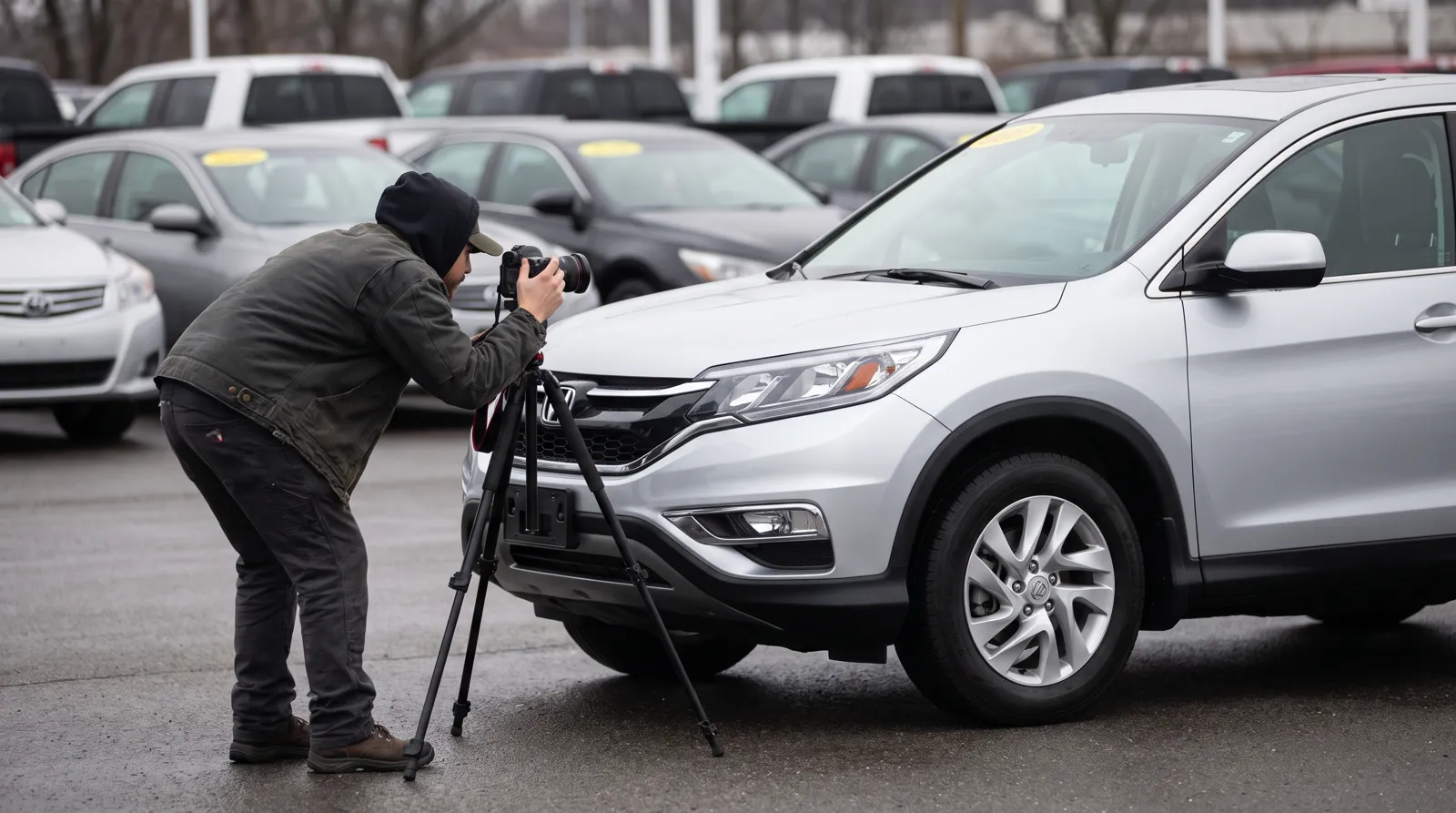
A car with real photos shows up in search. A car with a placeholder mostly doesn't. Post clear, accurate photos before final recon if you have to, label them honestly, then swap in finished photos once the car is front-line ready.
4. Use the carousel to sell, not just show
Most shoppers never read the page. They swipe. Put the proof early: the original window sticker, the key packages, the clean history, the reconditioning work. Callouts on the photos for equipment, CPO status and service history do the talking a salesperson would do on the lot.
5. Tell the car's story
Ask the question a good salesperson answers without thinking: if a customer were standing here, what would I tell them? Local trade. One owner. Garage kept. Just put tires and brakes on it. Clean report. Write that down, on every car.
6. Write descriptions for people and for AI
Shoppers now start with ChatGPT, Gemini and Google's AI answers as often as they start with a marketplace. Those systems read your text and structured data, not your photos. A thin or inaccurate description makes the car invisible to them.
7. Automate the repetitive work, keep humans on strategy
Option detection, photo callouts, first-draft descriptions, missing-field reports: that's the 3-to-4-hour grind, and it's exactly what software should do on every car, every day. People should set the standard and add what software can't know, like the fact that the previous owner was your service customer for ten years. Expect automation to be right most of the time and fix the rest. Don't let the occasional miss stop you from getting 90% done in minutes.
8. Audit like a shopper, every day
Each morning, open yesterday's new units on your phone. Not in the DMS. On the site, the way a buyer sees them. Is the first photo the real car? Is the story there? Would you drive over for it? Then check page speed, because a gallery that takes nine seconds to load is a merchandising failure no matter how good the photos are.
9. Build trust and social proof on the page
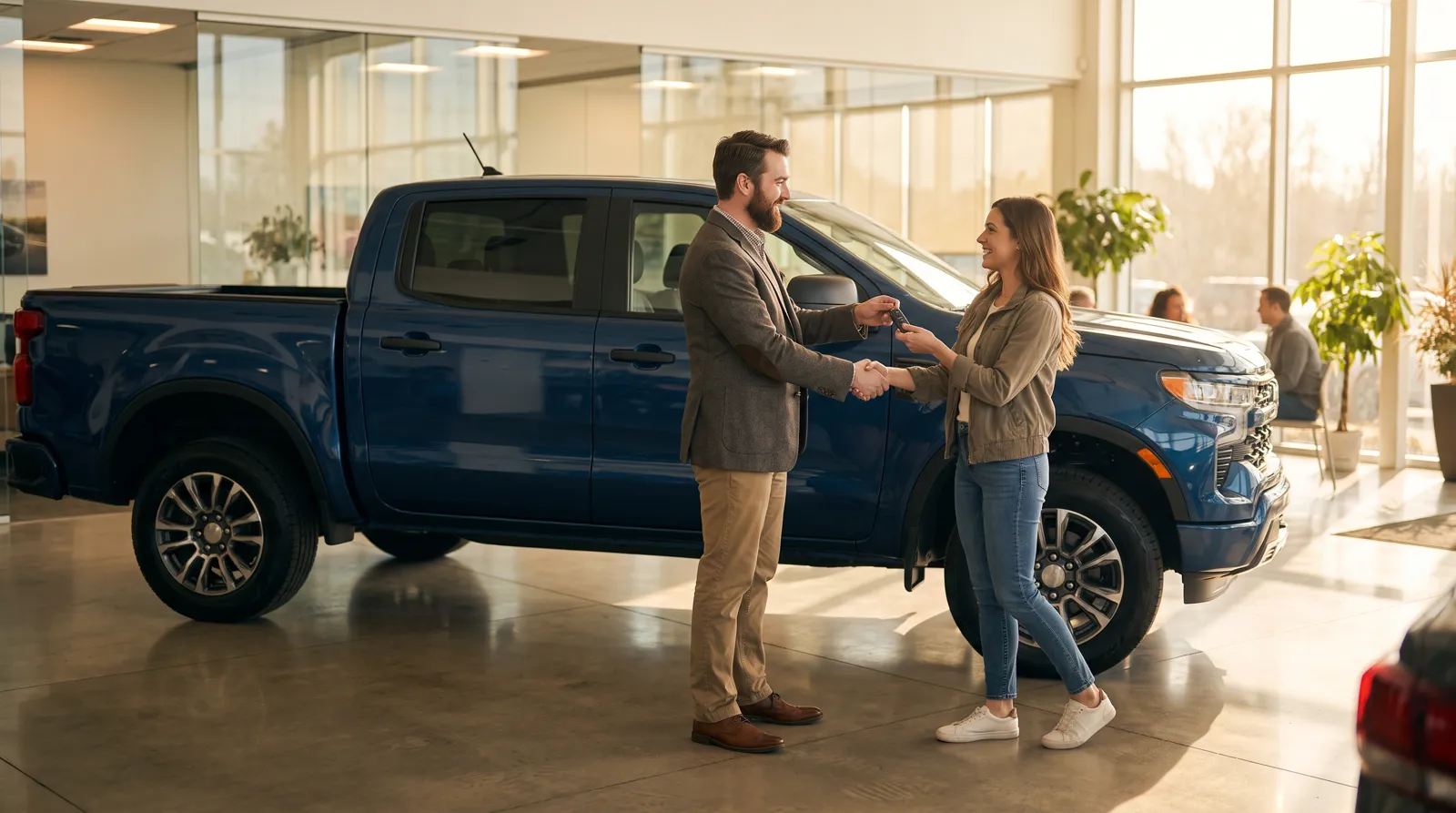
A shopper comparing your truck to three others is also comparing three dealers they've never met. The VDP has to answer "can I trust these people?" before the lead form, not after. Most dealers already have the proof. It just lives somewhere else on the site.
- Put your rating next to the price. Star rating and review count belong near the price and the main button, not only on a reviews page or in code search engines read. Better still, show two or three recent reviews that mention a salesperson or the buying experience.
- Prove the car, not just the dealer. Window sticker, history report, inspection checklist and recon work are the strongest trust signals on a used VDP. Put them in the first few photos and link them above the fold.
- Lead with credentials that are hard to fake. Manufacturer awards, years in business, BBB rating, number of cars delivered. If you've earned them, don't bury them in an FAQ.
- Show real people. Customer delivery photos, the actual salesperson who'll hand over the keys, the actual car on your actual lot. Stock photos and generic banners read as a template.
- Make the price math add up. A clear breakdown from MSRP or market value to your price builds trust. A stack of seven discounts with conditions in fine print creates doubt. If a rebate needs qualifying, say so plainly next to it.
- Use honest demand signals. "416 views this week" or "12 shoppers saved this truck" works because it's real. Fake countdown timers and "someone in Texas just bought" pop-ups teach shoppers to distrust everything else on the page.
- Never let the details contradict each other. Dealer notes that call a new truck "service records available," or list black leather next to a different interior color, cost more trust than they add. One wrong detail makes a shopper doubt the rest.
The per-VIN merchandising checklist
| Area | Minimum standard |
|---|---|
| Identity | Exact trim, exterior and interior color names, drivetrain, engine |
| Equipment | All packages and options decoded; original window sticker attached where available |
| History | History report linked; ownership, accidents and use called out |
| Recon & service | Work done listed: tires, brakes, fluids, inspection; CPO status if applicable |
| Photos | Real photos within a day; full walkaround; key options and sticker early in the carousel |
| Video / 360 | Walkaround video or spin for front-line units |
| Story | Two or three sentences on why this car: trade source, owner, condition, standouts |
| Price | Market-checked and updated; fees and incentives disclosed clearly |
| Trust | Rating and review count near the price; credentials visible; details consistent across notes, specs and photos |
| Page quality | Loads fast on a phone; answers the obvious questions without a form |
What we learned building VDPs from scratch
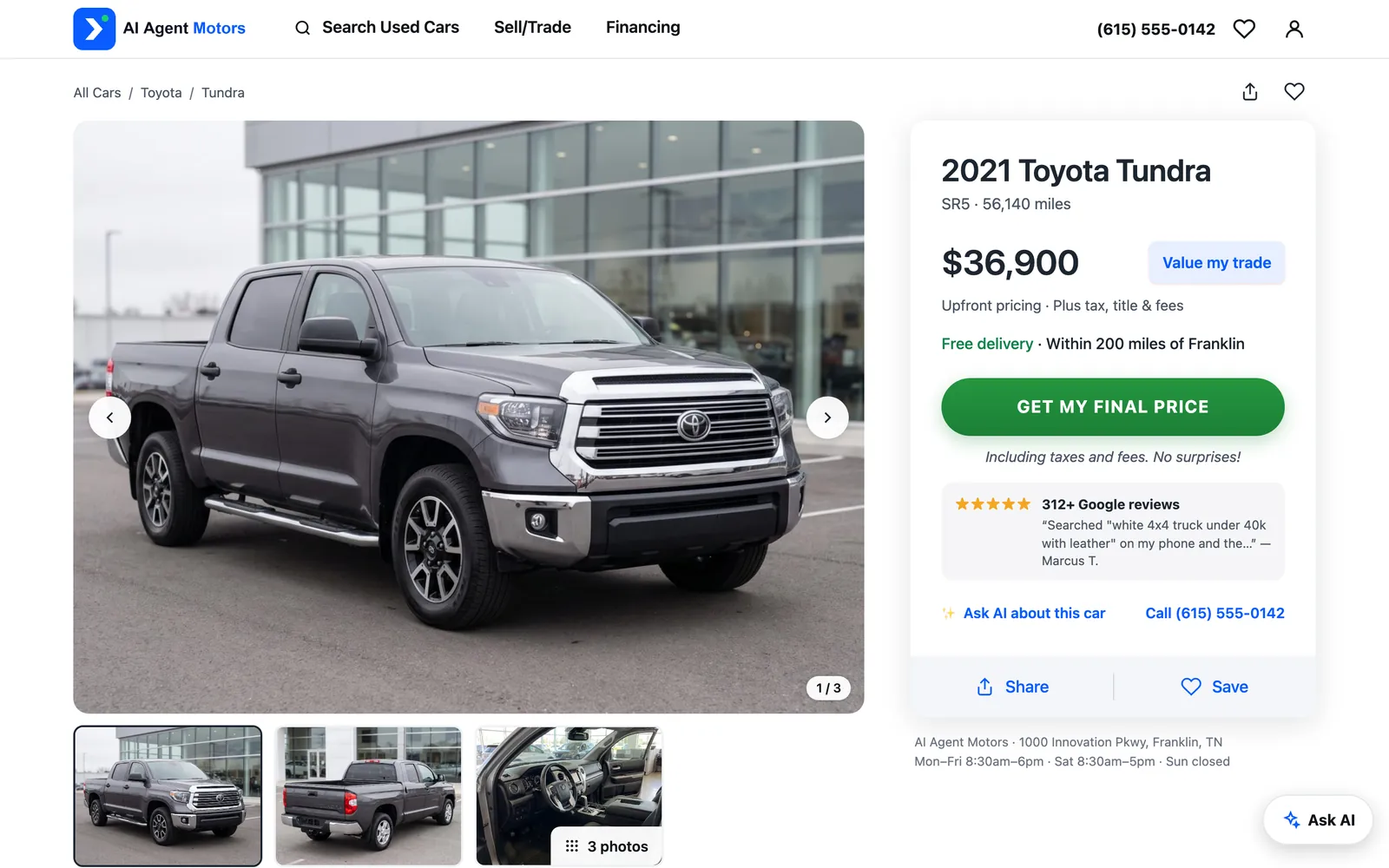
We build dealer websites around the vehicle page, and we run a demo dealership on the same platform. A few lessons held up across every build.
- Accuracy beats volume. An AI that writes more but invents a feature does more damage than a short, correct summary. Every generated claim should trace back to the vehicle's data. We learned this the hard way: our first assistant cheerfully suggested cars that didn't exist until we forced it to answer only from real inventory.
- Speed is part of merchandising. Our live client site scores 100 for mobile performance on Google PageSpeed. Legacy dealer sites commonly land between 20 and 50. The best photos in the world don't help if the shopper leaves before the first one loads.
- Answer the question on the page. "Does it have a tow package?" shouldn't require a form and a callback. When the page can answer, the shopper keeps going, and the lead that follows is warmer.
- Give shoppers a reason to come back. Saved vehicles with price-drop and sold alerts turn one visit into a relationship.
- Structure is the new SEO. Clean, structured vehicle data is what search engines and AI assistants use to decide which car to show. Merchandising now includes being machine-readable.
Merchandising for the next shopper: AI agents
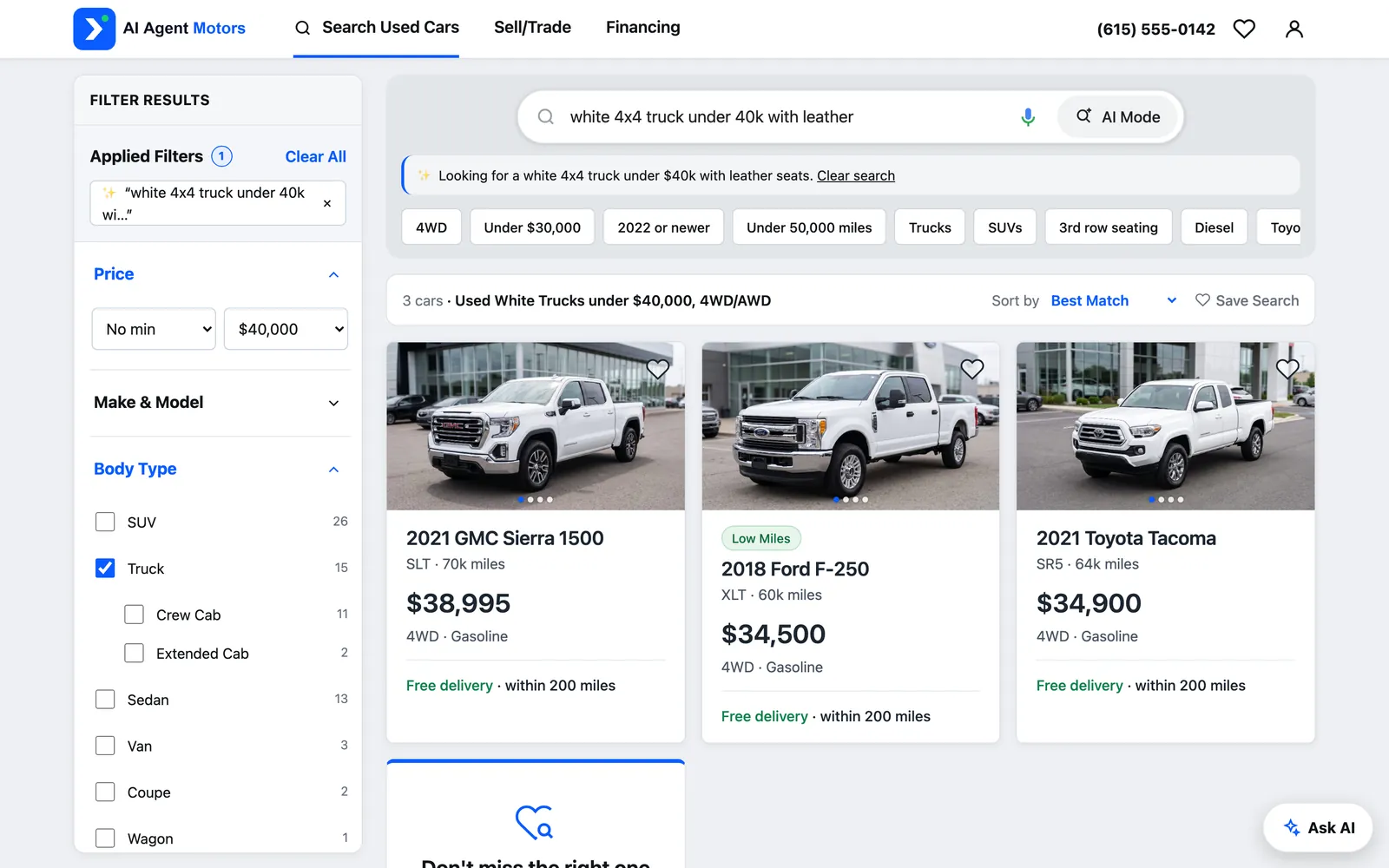
The next shopper on your VDP may not be a person. It may be ChatGPT, Gemini or a buyer's own AI agent, sent out with a job: "Find me a Sierra under $60,000 with four-wheel drive, and tell me what I'd actually pay." That agent won't swipe your carousel or read your banner. It needs structured facts it can trust, and it needs to know which facts are firm and which are conditional.
That's agentic automotive retail. Today most of it runs through marketplaces, because marketplace data is easier for AI to read than a dealer's website. The dealer gets a recycled lead at the end, or doesn't get one at all.
How every Dealer AI Website is built for it
- A dealer-specific MCP server on every site. MCP is the standard AI assistants use to connect to live data. Your inventory becomes typed tools an agent can call directly: search vehicles, read a vehicle's details, check availability and get a price explanation. No scraping, no guessing.
- Built on an open standard. The tools follow the Dealer Agent Protocol, an open specification for how shopping agents read dealer inventory, prices and offers. Our founder created it. Any agent that speaks the protocol gets the same answers from every rooftop.
- Our own agent on the showroom floor. Shoppers who come to your site directly get our AI assistant on every vehicle page. It reads from the same approved facts, answers questions at 2 a.m. and hands off to your team with a lead in your CRM.
The guardrails
- Your systems stay behind the line. Agents never touch your DMS, CRM or customer records. They see only the retail facts you publish.
- Price is explicit. Advertised price, required dealer charges and conditional offers stay separate, with eligibility spelled out. An agent can't turn a stack of rebates into a price no one qualifies for.
- No invented facts. Every answer carries its source and how current it is. Records that fail validation are held back before an agent ever sees them.
- Availability is verified, not promised. A listing isn't treated as a guarantee. Until a real-time source is connected, availability answers say a person needs to confirm.
- A human closes the deal. When the shopper is ready, the agent sends a contact request with the vehicle attached. It arrives in your CRM as a standard lead, and your team takes it from there.
The result: when an AI agent shops for a truck, your truck is in the answer, the price it quotes is one you'd stand behind, and the customer ends up talking to you, not a marketplace.
The bottom line
The gap is simple and expensive. Dealers know what makes a car worth buying. They just aren't putting it online, consistently, on every unit. Close that gap with a standard, show shoppers why they can trust you, automate the grind, and spend your people's time on the story only they can tell.
See it on real inventory
Every Dealer AI Website ships with AI summaries, a grounded AI assistant on every VDP, structured data for AI search and pages that load instantly. Pre-Owned from $499/mo, Franchise $999/mo, first month free.
Book a demoBrowse the live demo store